

Phenolic compounds, free radical scavenging activity and antioxidant capacity of residual material from oil-bearing rose after distillation

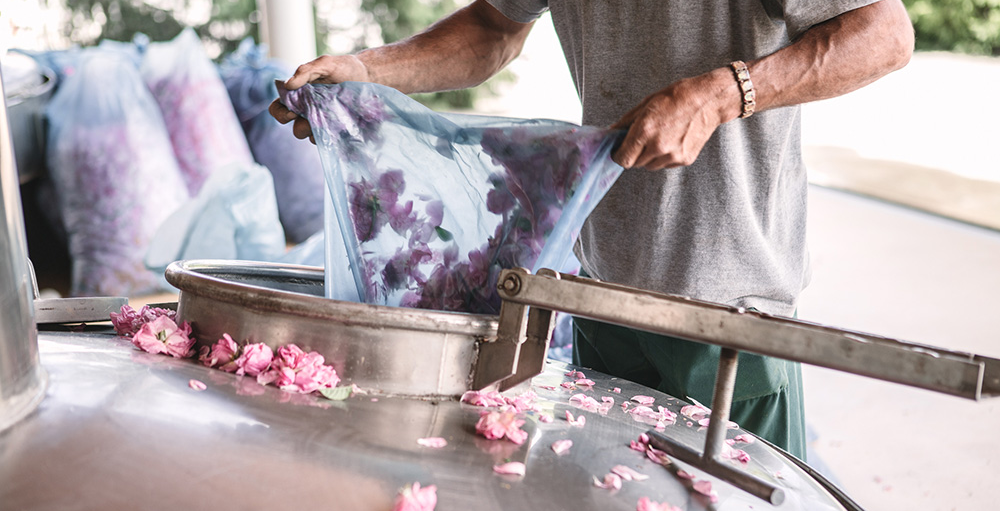
Turkish researcher N. G. Baydar and his colleagues published a study in 2013 entitled “Phenolic compounds, antiradical activity and antioxidant potential in spent residues of oil-bearing rose flower and green leaves” in the journal Industrial Crops and Products. In it, they draw attention to a little-studied but important topic – what happens to the residues of rose flowers and green leaves after the extraction of rose oil and whether this “waste” can have real value.
After the distillation process, rose petals and leaves often remain unused, although they continue to contain a number of active substances. The authors studied these “spent residues” (residues after primary processing) and focused on phenolic compounds – plant substances well known for their antioxidant properties. They also measured the antiradical activity, that is, the ability of the residues to neutralize free radicals, which can damage cells and accelerate the processes of aging and disease.
The results of the analysis show that both rose petals and green leaves, even after oil extraction, retain significant amounts of phenolic compounds. The petals are richer in such substances and demonstrate higher antioxidant activity, but the leaves also have a measurable effect. This means that the residues of the harvest can be considered as a valuable resource, and not as useless waste.
The conclusion of the scientists is that these residual products have the potential to be used in the creation of natural antioxidant sources. This could be reflected in various industries – food, cosmetics or pharmaceuticals – and add value to the already established process of rose production.
In this context, the Bulgarian damask rose, well known for its quality and rich chemical profile, has potential not only as a source of the famous rose oil, but also as a raw material from which additional beneficial substances can be extracted. Thus, the residues from the production of rose oil and rose water could become a new direction for the development and sustainable use of the plant.
Source: Baydar, N. G., Ozbek, H., & Akkurt, M. (2013). Phenolic compounds, antiradical activity and antioxidant potential in spent residues of oil-bearing rose flower and green leaves. Industrial Crops and Products. ScienceDirect
